
Are You Smarter than a 5th Grader?
"Are You Smarter than a 5th Grader?" turns elementary-school knowledge into a television challenge for adults. Contestants face questions inspired by subjects normally taught from first through fifth grade, discovering that material learned years ago can be surprisingly difficult to recall under pressure.
The contrast between confident adults and knowledgeable children gives the show its playful character. The questions are familiar enough for viewers to join in, but tricky enough to create plenty of unexpected mistakes.
Back to the Classroom
Contestants work through questions covering subjects such as mathematics, geography, history, science, spelling, and language arts. Each question is associated with a school grade, allowing players to choose topics while gradually moving toward more demanding material.
The host guides the contestant through the board and keeps the atmosphere light, especially when a seemingly simple school question produces hesitation or an incorrect answer.
Help from the Fifth Graders
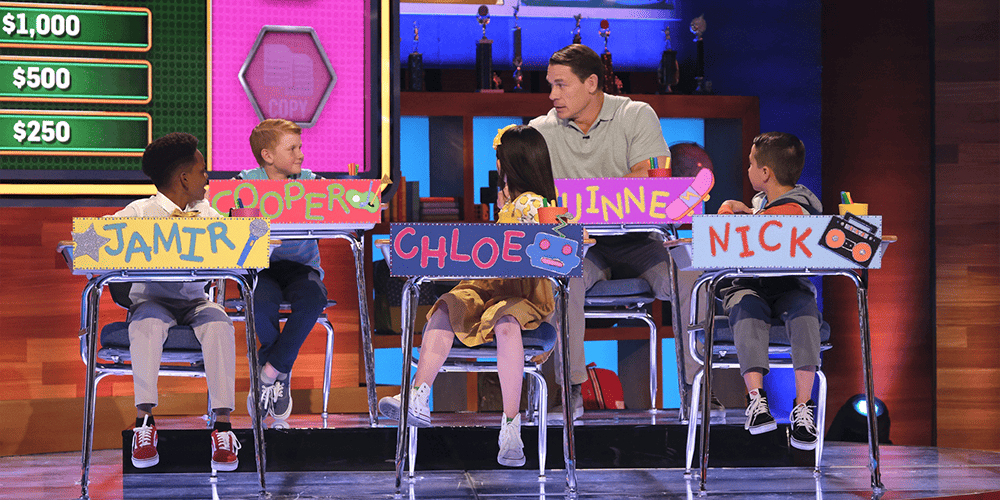
A group of actual fifth-grade students plays alongside the adult contestant. One child at a time can become the contestant’s classmate, answering questions independently and potentially providing valuable assistance.
Depending on the version of the format, lifelines such as Peek, Copy, and Save allow contestants to use a classmate’s answer when they are uncertain. Peek lets the adult look at the student’s response before deciding, while Copy commits them to that answer. Save can rescue a contestant after a mistake if the child answered correctly.
These options make the students an active part of the competition rather than simply part of the scenery.
Why the Children Matter
The fifth graders give the format much of its humor and personality. Their quick answers often contrast with adults who struggle to remember information they once learned in school.
The classroom dynamic also produces spontaneous moments between contestants, students, and the host. Rather than presenting the children as opponents, the show makes them teammates whose knowledge can become essential to an adult’s progress.
A Quiz Everyone Can Play
The questions are designed around familiar school subjects, making the show easy to follow without specialist knowledge. Viewers can test themselves at home and often discover that remembering elementary material is harder than expected.
That creates a different kind of quiz-show appeal. Success depends less on obscure trivia and more on whether contestants can recover knowledge that once seemed basic: fractions, state capitals, grammar rules, scientific facts, and historical events.

Host and Classroom Style
The presentation reinforces the school theme with desks, blackboard-inspired graphics, colorful classroom details, and question categories organized by grade level. The visual style keeps the competition approachable rather than overly serious.
The host combines encouragement with gentle teasing, particularly when a child knows something an adult has forgotten. Those exchanges help maintain the family-friendly tone while keeping the game moving.
A Widely Recognized Game Show Idea
Since its television debut, "Are You Smarter than a 5th Grader?" has been adapted in numerous countries. The concept travels easily because the basic challenge is universal: how much do adults really remember from their school years?
The title itself became a familiar phrase beyond television, often used whenever supposedly simple knowledge catches someone by surprise. By mixing nostalgia, education, humor, and competition, the show created one of the most recognizable classroom-inspired formats in modern game-show television.