
University Challenge
"University Challenge" is one of Britain’s best-known and longest-running television quiz shows. Teams representing universities compete in a demanding test of general and academic knowledge, with questions ranging from science and history to literature, music, art, and mathematics.
The program is famous for its fast pace and uncompromising difficulty. Contestants need more than specialist knowledge: success depends on quick recall, confident buzzing, and a team whose members can cover very different subjects.
How the Quiz Works
Each match features two teams of four students. The game revolves around two types of questions: starters and bonuses. A starter is open to both teams, and contestants buzz individually when they believe they know the answer. A correct response earns points and gives that team a set of bonus questions. For bonuses, the four players can briefly confer before the captain gives the final answer.
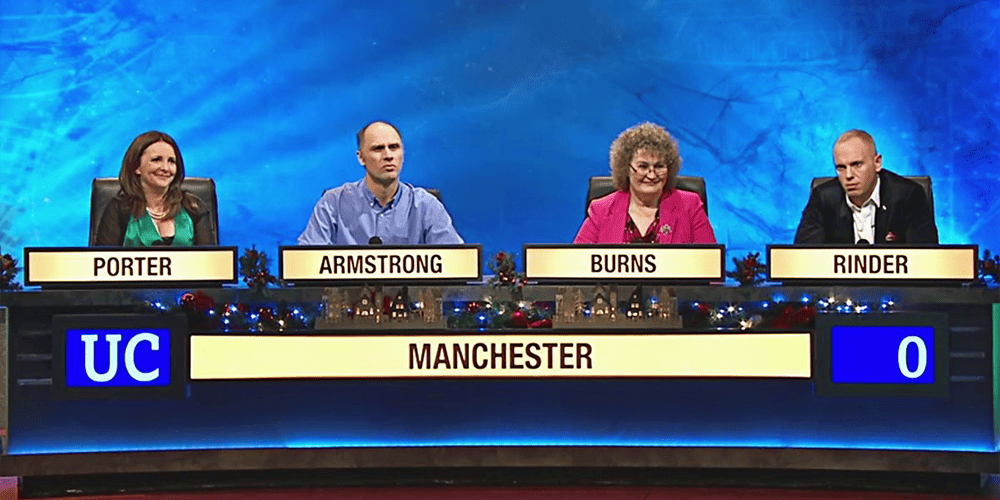
This creates a distinctive rhythm. A fast individual response can win control of the game, but converting bonus questions requires teamwork. Scores can therefore change rapidly, particularly when one side builds momentum through several successful starters.
A Remarkably Broad Range of Questions
Few television quizzes move between subjects as quickly as "University Challenge". A sequence might begin with physics, continue through medieval history, and finish with opera, geography, philosophy, or contemporary culture.
That variety rewards balanced teams. Individual contestants often have areas in which they are particularly strong, but no single specialism is enough to carry an entire match. The most effective teams combine different fields of knowledge and recognize when to trust a teammate’s expertise.
Teamwork Under Pressure
Although speed on the buzzer is essential, the show is also a team competition. Bonus rounds reveal how contestants exchange ideas, correct one another, and reach a decision within only a few seconds.
Those brief discussions are an important part of the program’s character. Sometimes the answer is immediate; at other times, viewers see a team work through several possibilities before the captain has to commit. Close matches make those small decisions especially significant as the final gong approaches.
Why Viewers Play Along
The difficulty of "University Challenge" is part of its appeal. Viewers are not expected to know every answer, which makes recognizing an obscure reference or beating the contestants to a question particularly satisfying.
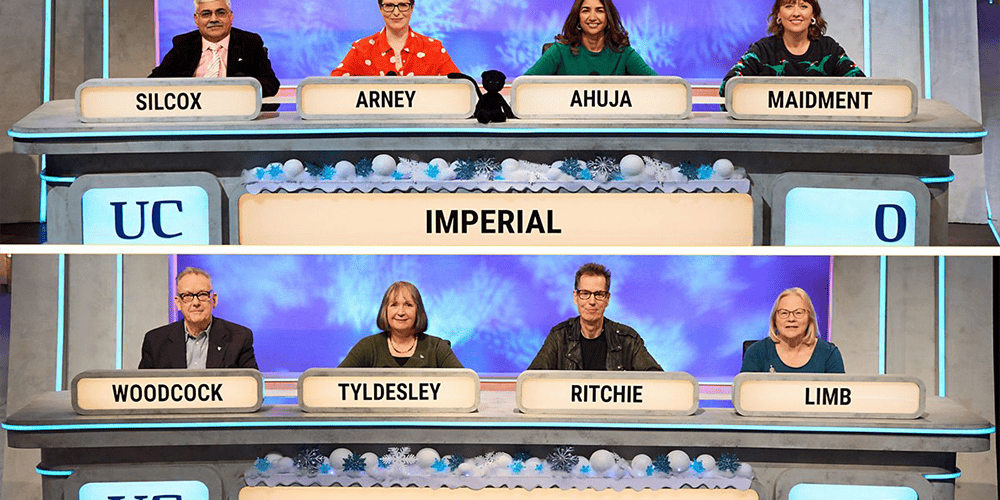
The format also turns academic knowledge into straightforward television competition. There are no elaborate challenges or complicated rules: two teams, a scoreboard, buzzers, and a constant stream of questions are enough to create tension. Even a substantial lead can disappear if the opposing team produces a strong run late in the match.
Hosts and Presentation
The presenter has always been central to the show’s identity. Bamber Gascoigne established the original television style, while Jeremy Paxman became closely associated with the revived series through his brisk delivery and famously direct manner. A later era began with Amol Rajan, continuing the tradition of keeping attention firmly on the questions and contestants.
The visual presentation is similarly restrained. Teams sit behind desks displaying their university and surnames, while clear scoring graphics and the familiar buzzer system keep the contest easy to follow. The deliberately academic appearance has become one of the most recognizable designs in British quiz television.
A British Television Institution
First broadcast in 1962, "University Challenge" has developed a reputation that extends well beyond university audiences. Generations of students have appeared on the program, and memorable contestants, close finals, and exceptionally difficult questions regularly become talking points among viewers.
The phrase “Your starter for ten” has also become closely associated with the show and is widely recognized beyond the quiz itself.
Despite changes in presenters and production over the decades, the central formula has remained remarkably consistent. Its combination of specialist knowledge, rapid recall, teamwork, and simple head-to-head competition continues to make "University Challenge" one of the most distinctive quiz formats on British television.